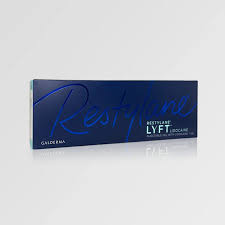
Restylane Lyft Lidocaine (1x1ml)
-
Free shipping on all orders over £200
Volume loss in the middle of the face receives little discussion compared to wrinkles or changes in the lips. This issue creates greater effects on facial appearance than many other shifts that occur. Cheeks lose substance in their structure and shadows form in places once occupied by fullness. The face begins to show signs of tiredness without any cause from daily activity. Restylane Lyft with Lidocaine exists to target this situation through a filler of hyaluronic acid with a higher density that supports structural lift. It works in the zones where age produces its strongest influence. Practitioners and patients gain an advantage when they review important information before they decide on this option, particularly when comparing restylane filler options for mid-face rejuvenation.
What Is Actually in the Syringe?
The science that powers the syringe allows people to follow its core principles with clarity, and interest grows when one explores the details that define the product in practice. Galderma created Restylane Lyft with Lidocaine through their NASHA technology which expands as Non-Animal Stabilised Hyaluronic Acid and they set the concentration at 20 mg/mL for this formulation. Workers cross-link the gel with BDDE then suspend it in phosphate-buffered saline at pH 7 so the mix holds 0.3% lidocaine right inside from the start of preparation.
The inclusion of lidocaine serves a functional role rather than promotion alone. Mid-face injections create discomfort for patients and the presence of a built-in analgesic eliminates any requirement for an extra pre-treatment step while it reduces chair time which counts during sequences of back-to-back appointments. Practitioners who handle high volumes notice this difference clearly by mid-afternoon in their schedule.
Restylane Lyft holds a defined place inside the product range and the G-prime value of 977 Pa accounts for that placement. G-prime records the resistance of a filler against deformation and the value of 977 Pa stands as the highest among all FDA-approved hyaluronic acid fillers. This measurement shows the amount of structural lift the product creates for each unit that enters the tissue and the figure reflects performance instead of any branding element. Fillers designed for surface wrinkles position themselves near the dermis. Restylane Lyft advances to deeper layers where it maintains placement and restores volume to zones where soft tissue along with bone has receded, distinguishing it from many restylane injectables intended for softer correction.
| Benefit | Detail |
| Built-in pain management | 0.3% lidocaine reduces procedural discomfort without a separate anaesthetic |
| Structural lifting | G-prime of 977 Pa, the highest among FDA-approved HA fillers |
| Treatment longevity | Results typically last 6 to 12 months |
| Reversibility | Fully dissolvable with hyaluronidase |
| Cross-linking level | Less than 1% BDDE, formulated close to the body’s own HA |
| Clinical track record | Backed by over 20 years of worldwide safety data |
Key Benefits at a Glance
Galderma published clinical outcome data in November 2025 showing 99.1% of investigators and 94.5% of patients confirmed visible improvement at the three-month mark, with 86.3% of participants describing the results as natural-looking at 12 months.
Where Restylane Lyft Is Actually Used?
The product’s reputation is built on where it works, not just how. Cheek augmentation is the application Restylane Lyft is most associated with, and for good reason. Mid-face structural loss starts earlier than most patients expect, and the visual impact is significant; Restylane Lyft approaches this by depositing volume at the supraperiosteal level, working with bone structure rather than just layering above it.
Mid-face contour correction goes a step further, addressing the malar and submalar regions where the broader architecture of the central face is determined. Nasolabial folds in the moderate-to-severe range are also within scope; lighter products often lack the projection to shift these meaningfully, whereas Restylane Lyft’s density gives the fold a reason to move. Within the wider restylane dermal filler portfolio, this formulation remains one of the most structurally supportive.
The pivotal US trial MA-1400-05 enrolled 200 subjects according to a 3 to 1 randomised ratio and evaluators confirmed 88.7 per cent of treated participants as responders for mid-face augmentation on the Medicis Midface Volume Scale at the two-month point. Practitioners apply the product off-label for jawline definition along with non-surgical rhinoplasty and dorsal hand rejuvenation in cases where patient presentation aligns with the approach.
Does It Work for Lips?
No, and the reason is structural. Properties that support Restylane Lyft performance in the mid-face area include its G-prime value along with particle dimensions and these attributes position the product outside the suitability for lip procedures. Tissue in the lips undergoes ongoing movement and a filler of this nature would present as inflexible during use which leads to outcomes that appear out of place for practitioner and patient alike. Galderma prepared additional items in the Restylane selection with viscosity levels adjusted downward and gel matrices that allow movement for procedures on the lips and the separation between products serves a clear purpose, alongside treatments such as the restylane skin booster for improving skin quality rather than adding structural volume.
Side Effects: What the Clinical Data Shows
| Side Effect | Frequency | Expected Resolution |
| Swelling and oedema | Very common | 7 to 14 days |
| Bruising and erythema | Common | 7 to 10 days |
| Tenderness on palpation | Common | Within 1 week |
| Nodule formation | Less common | Variable; may require review |
| Delayed hypersensitivity | Rare | Weeks to months post-treatment |
| Vascular complications | Rare | Requires immediate intervention |
Decades of clinical use have generated a safety profile that receives full recognition and records exist in detail. Injection site reactions form the majority of reported adverse events and the events stay limited in scope with a duration that passes quickly in line with what occurs after treatment. Symptom diaries in the 200-patient US pivotal study recorded bruising along with redness swelling pain tenderness and itching across a 14-day period after treatment and this approach supplies clinical substance to the collected information.
Contraindications include hypersensitivity to lidocaine or hyaluronic acid active skin infections at the planned injection site coagulopathies pregnancy and breastfeeding. Restylane Lyft Lidocaine functions as a prescription-grade injectable and the product requires administration only inside qualified clinical practice without extension to other environments.
Candidate Selection: Who Is the Right Patient?
UK demand for mid-face treatment has moved well past a niche concern. AestheticMed’s 2025 report placed mid-face dermal fillers among the highest-demand treatment categories, with patients aged 26 to 44 driving significant volume through preventative restoration, and Millennials now sitting among the top spenders on fillers across the UK market as a whole.
Clinically, Restylane Lyft suits patients from the mid-30s onwards when mid-face volume loss becomes visible enough to treat, though that threshold varies considerably between individuals. Patients interested in broader skin rejuvenation may also discuss the restylane skinbooster range during consultation.
Candidate suitability rests on clinically significant volume loss or asymmetry, not on age as a standalone marker. Coagulopathies or hypersensitivity to lidocaine rule out treatment entirely. Skin thickness, bone structure, prior filler history, and what the patient is actually trying to achieve all feed into the assessment, which is why a full facial analysis before injection is not optional.
Why Vibe Pharma for Supply?
The UK aesthetic injectable market is not quietly growing; it is accelerating. Grand View Research data from 2025 puts current sector revenue at USD 493.1 million, with projections reaching USD 1,037.3 million by 2033 at a CAGR of 9.7%. Expansion at that rate makes distributor compliance a genuine clinical consideration, not just an administrative one.
Vibe Pharma conducts operations from Salford in the role of MHRA-licensed pharmaceutical and aesthetic supplies distributor with licence number 59505 and the company maintains a partnership with SignatureRX. The company stocks dermal fillers, skin boosters, polynucleotide toxins and clinic consumables that come from global brands while it supplies clinics and healthcare professionals throughout the UK through a model centred on regulatory compliance. Restylane, in the 1x1ml size, lists at £75.00 per unit as a prescription item that carries zero VAT and orders that exceed £200 receive free shipping. Clinics sourcing restylane filler, restylane skin booster, and restylane lyft products benefit from this regulated supply chain.
Clinics running multi-product aesthetic programmes will find that consolidating Galderma orders through a verified, MHRA-licensed distributor like Vibe Pharma keeps regulatory exposure manageable and stock control simpler while ensuring continued access to restylane lyft and related products.
| Price | Prescription item zero VAT (£75.00), Stock item VAT payable |
|---|
Frequently Asked Questions About Restylane Lyft Lidocaine (1x1ml)
Is Restylane Lyft Suitable for Everyone?
The product is not every person's cup of tea. Patients 21 and older are considered and include those who have a clinically significant mid-face volume loss and require consultation, including a medical history review and an evaluation of the facial condition prior to injection.
Can It Be Combined with Other Treatments?
Yes, combination treatment is used in a comprehensive treatment plan. The area in the middle of the face is generally chosen first as it establishes a foundation for the lower face and lips to read more correctly before enhancing anything else. Combining Restylane Lyft and botulinum toxin (Botox) is performed on a regular basis and is a common procedure, but each patient, of course, needs to be considered individually.
What Is the Ideal Age Range for The Treatment?
The typical candidates for Restylane Lyft are adults over 21 years old, most of whom are at the mid-30's and above at which time there is loss of mid-face fullness. But it is not about age only since it is not suitable for everyone based on facial assessment and a person's clinical requirements.
What Is the Recommended Injection Technique?
Indeed, there is no universal method for use in all patients, depending on their anatomy and clinical judgement. Depending on the presentation, bolus injection is done at the supraperiosteal level and linear threading is performed in the subcutaneous plane, then cross-hatching is performed for a broader coverage of the volume. This is where cannula over needle is now the most popular preference as the previously mentioned safety margins are clearly more appealing and also significantly less bruising is seen after treatment.
Is Restylane Lyft Suitable for Lip Enhancement?
No, because No. Restylane Lyft is meant for structural support as well as the restoration of mid-face volumization, and this is too firm for the lips. Softer Restylane fillers work best for a more natural enhancement to the lips.
Related Products
Regenovue Fine (1ml)
£18.99
Nitrofurantoin SR Capsules 100mg (14)

Recently Viewed Products
LUMIFIL® Lite
LUMIFIL® Max
LUMI-PRO Eyes
Lumifil LUMI-PRO Skin Booster (3 Pack)